
Supporting Local & Central Government, Share Market, Investment & Business Growth
Independent Hearing Commissioner
Andrew specialises in strong governance



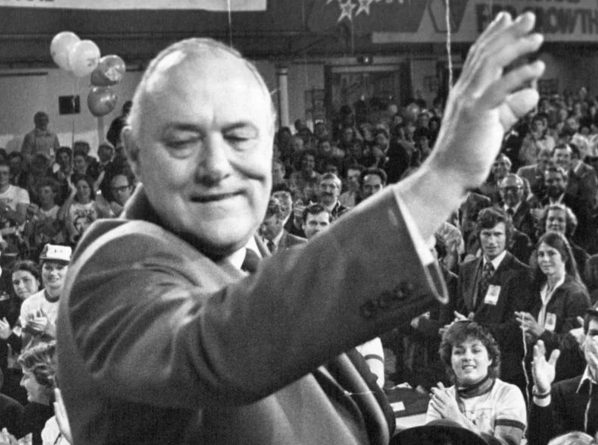
MULDOON’S $500 BILLION MISTAKE – A LEGACY OF LOST OPPORTUNITY
Based on an opinion article by Sam Stubbs, Chief Executive of KiwiSaver provider Simplicity.
Sam Stubbs argues that Sir Robert Muldoon’s decision on 15 December 1975 to abolish New Zealand’s fledgling compulsory superannuation scheme was arguably the worst financial decision in our country's political history.
Had the scheme survived, Stubbs estimates New Zealanders would have accumulated at least $500 billion in individual retirement savings, fundamentally transforming our economic prosperity.
Introduced by Labour in 1974, the scheme required compulsory contributions of 8% of gross earnings, shared equally between employers and employees, with individually owned and portable retirement accounts. It survived just 11 months before National abolished it, following its successful election campaign featuring the infamous “Dancing Cossacks” television advertisement.
While acknowledging the simplicity and benefits of the universal NZ Superannuation system that replaced it, Stubbs highlights its growing fiscal burden as our population ages. Successive governments have been reluctant to address its long-term affordability because of the political consequences.
Stubbs argues that a substantial domestic savings pool could have delivered enormous economic benefits, including:
-
Greater domestic ownership of successful New Zealand businesses.
-
Reduced dependence on overseas capital.
-
Better-funded infrastructure, healthcare and education.
-
Greater investment in affordable, quality housing.
-
Improved retirement security and economic resilience.
Although KiwiSaver has belatedly begun rebuilding New Zealand’s retirement savings base, the country has lost decades of potential compound investment returns.
My View: I wholeheartedly agree with the sentiment expressed by Sam Stubbs. Muldoon’s decision is a classic example of short-term political expediency overriding New Zealand’s long-term economic interests. While the precise financial benefits are necessarily speculative, the opportunity cost has been enormous. There is an important lesson here for today's politicians: sound intergenerational economic policy must take precedence over short-term electoral advantage.
Note: The $500 billion figure is Stubbs’ estimate rather than a verified financial projection.










Receive the next monthly edition
Join a dedicated group of friends, peers, and thoughtful observers. Each edition arrives directly to your inbox every month, free and straightforward.
Get in touch
Correspondence
Andrew von Dadelszen
Tauranga, New Zealand
